Stronger communities for better public services
Voluntary amalgamation gives local communities the opportunity to strengthen their administrative capacity, attract investment, and develop modern, efficient public services for citizens.
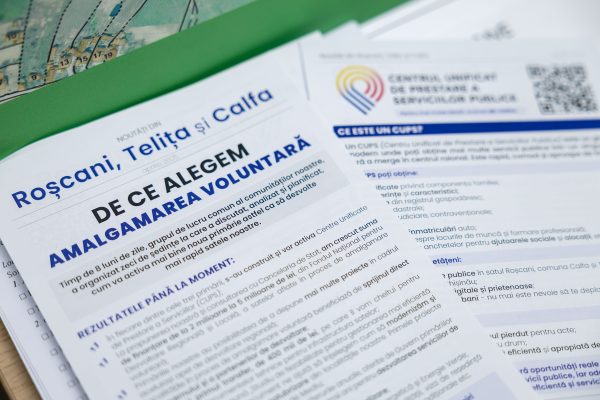
Why digitalisation matters

Excessive administrative fragmentation limits local development and equal access for citizens to quality public services. In the Republic of Moldova, most mayoralties manage limited resources and face difficulties in implementing large infrastructure and development projects.
Currently:
- 87% of municipalities have fewer than 3,000 residents
- 776 municipalities have fewer than 3,000 residents
- 63 municipalities have between 3,000 and 5,000 residents
- 53 municipalities have more than 5,000 residents
In this context, voluntary amalgamation represents a real opportunity for community development and the strengthening of local public administration.
Benefits of voluntary amalgamation
Voluntary amalgamation gives local communities the opportunity to strengthen their administrative and financial capacities, contributing to more efficient public services and an improved quality of life for citizens.
Through amalgamation, communities can more easily implement infrastructure and local modernization projects, including:
– road rehabilitation and construction projects;
– expansion and upgrading of water supply and sewage networks;
– improved and modern waste collection and sanitation services;
– upgrading and modernization of local public infrastructure.
Community consolidation contributes to:
– more efficient use of public resources;
– increased administrative capacity;
– attraction of investment and external funding;
– development of sustainable public services.
The amalgamation process encourages:
– cooperation between localities;
– consultation and involvement of citizens;
– development of local and regional partnerships;
– identification of joint solutions to community challenges.
Why do communities choose amalgamation?
- better public services
- modernized infrastructure
- access to investment and funding
- more efficient local administration
- cooperation between communities
- more active citizen engagement
How does voluntary amalgamation work?
Starting in 2024, two or more neighbouring administrative-territorial units can voluntarily decide to merge in order to manage resources more efficiently and support community development
The process is regulated by:
Law No. 225/2023
Government Decision No. 925/2023
The mechanism is entirely voluntary and depends exclusively on the decision of local authorities and the residents of the involved communities.
Why do communities choose amalgamation?
Voluntary decision
The amalgamation process takes place exclusively at the initiative and with the consent of the involved communities and local authorities.
Accessible services
After amalgamation, citizens continue to benefit from public services close to where they live.
Sustainable development
Amalgamation contributes to strengthening communities and supporting long-term local development.
Support for communities choosing amalgamation
SALAR International, through the PACE Local project, supports communities initiating voluntary amalgamation processes by strengthening local capacities, facilitating the exchange of good practices, and supporting improvements in public services provided to citizens.
Through collaboration with local public authorities and national partners, the project contributes to strengthening local public administration and developing stronger, more resilient communities.