
The European Union acquis in agriculture and rural development is particularly relevant to local public authorities, as it establishes the standards, policies and funding mechanisms that support competitive agriculture, food safety and the development of rural communities.
The Ministry of Agriculture and Food Industry (MAFI) coordinates the transposition into national legislation of the EU acquis under Chapters 11, 12 and 13, which are part of Cluster 5, “Resources, Agriculture and Cohesion”:
– Chapter 11, “Agriculture and Rural Development”, focuses on aligning the Republic of Moldova with the principles of the Common Agricultural Policy (CAP), the EU’s main policy framework for supporting farmers. Around 30% of EU funding is allocated to agriculture and rural development;
– Chapter 12 covers food safety, public health, hygiene throughout the food chain, animal and plant health and welfare, as well as food quality;
– Chapter 13, “Fisheries and Aquaculture”, sets out specific obligations while also creating opportunities for the development of the sector.
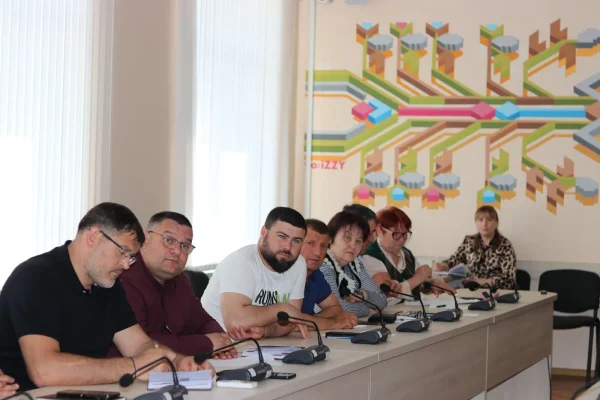
Progress achieved and the actions required to further transpose the EU acquis were discussed by mayors and local government staff with Ina Butucel, Deputy Secretary General of the Ministry of Agriculture and Food Industry.
Among the key updates presented were:
– A significant share of the more than 2,000 relevant EU legal acts has already been transposed into national legislation;
– Work is underway to accredit the Agency for Intervention and Payments for Agriculture (AIPA), enabling it to manage EU funds and, from 2028, pre-accession funding for agriculture and rural development;
– Local authorities should remain actively involved in Local Action Groups (LAGs), as EU instruments support local infrastructure, rural economic diversification, job creation and community development through the LEADER approach and LAGs;
– The subsidy application mechanism will be adjusted. For investment support, applicants will be required to submit a financing proposal similar to a business plan;
– Data collection for the Farmers’ Register will begin in autumn. Registration will become mandatory for accessing agricultural subsidies and EU funding;
– MAFI is developing the Agricultural Parcel Register, which will integrate geospatial imagery and information on agricultural land, parcels and crops. – The data will also be accessible to local authorities;
– The Animal Register is currently being updated.
In the context of activities to be carried out in rural communities this autumn, a European Commission delegation specialising in food safety will assess compliance with animal health and welfare requirements for animals raised in private households. The communities and households to be monitored will be selected randomly.
Ina Butucel also addressed several misleading claims circulating in rural communities about the potential impact of European integration on agriculture:
– People will continue to be allowed to raise chickens, rabbits, sheep, goats and other animals in their households, provided that the applicable legal requirements are respected;
– Moldovans will also be able to slaughter animals in their own households after the Republic of Moldova joins the EU. However, in such cases, the meat may only be consumed within the respective household and may not be sold;
– Agricultural activities that do not meet EU standards will not automatically be shut down. However, their products will not be eligible for sale on the EU market and may only be marketed within the Republic of Moldova;
– EU accession does not mean that foreign nationals will immediately acquire the right to purchase agricultural land in the Republic of Moldova. In this regard, the Moldovan authorities intend to request an extended transition period from the European Commission.
The Deputy Secretary General of MAFI encouraged representatives of local public authorities to continue informing themselves about the Republic of Moldova’s EU accession process and the transposition of European requirements into national legislation. These changes will affect both the work of local authorities and the everyday life of communities and local businesses.
Strengthening local administrative capacity is essential to turning European agricultural and rural development policies into tangible benefits for farmers, rural businesses and communities.